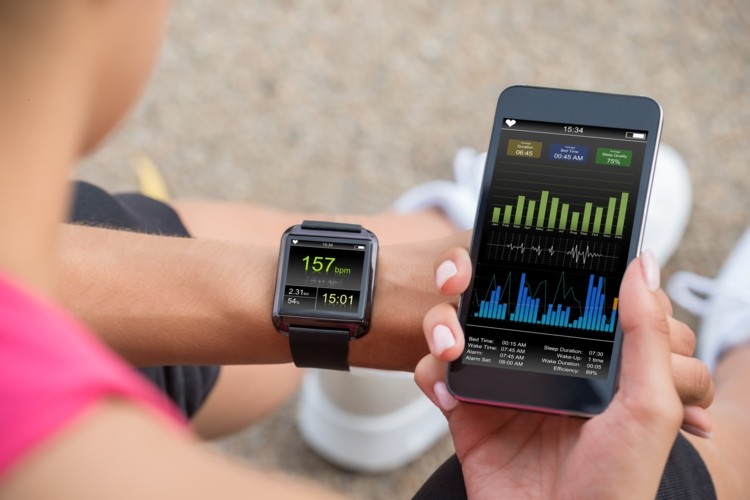
Wearable devices, also commonly referred to as smart watches have wireless capabilities and they can be linked to other devices such as smart phones. In addition to telling the time, they can also allow you to check emails, send text messages, make phone calls via Bluetooth and some also have a GPS built in.
However some may argue that their main purpose would be to monitor and record data based on an individuals activity.
Although they can monitor a person’s heart rate and record how many steps were taken that day, the disruptive nature of these devices has caused health professionals to utilize their features in a more significant way.
Here we will explore the health industry and identify how wearable devices have emerged into this field.

In recent years wearable technologies have made a significant development and have become popular with consumers where over millions have been sold (Metcalf et al. 2016).
The features and functionality of wearable devices are limited in comparison to smart phones. Metcalf et al (2016) argue that although this is true, wearable’s introduce consumers with the opportunity to empower themselves with the ability to acquire consistent streams of data in regards to their physiology and kinesiology.
To explain the elements of wearable technology in more detail, we will focus on the specifications of two popular devices, the Fitbit and the Apple Watch.
Avila and Bailey (2015) explain the basic elements of the Fitbit:
- The Surge – adds GPS tracking and an optical heart rate monitor.
- Ample memory to store enough information of second-by-second motion data.
- A monochrome LCD touch screen that allows a watch like feel.
- An app that can be run off the users device such as a phone or computer to view charts of data that have been wirelessly transmitted.
Avila and Bailey (2015) further explain the basic elements of the Apple Watch:
- Rotating digital crown – This allows the user to zoom in and out without blocking the screen with a pinching gesture.
- Taptic engine – this allows sensors to provide feedback to the user through vibrations and other notification methods.
- Heart rate sensor and accelerometer – provides detailed tracking in conjunction with the Wi-Fi and GPS system in the users smart phone.
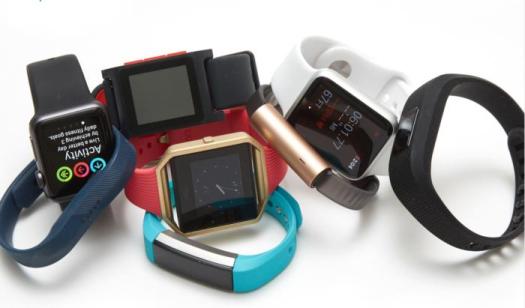
Wearable devices have not only made an impact in the commercial industry but also in health. Erdmier, Hatcher and Lee (2016, p. 141) outline that the typical consumer can now monitor and manage their health through their smartphones. This is also something healthcare organisations have now taken on board and are now utilising to reduce operating costs, and to provide an easy way of monitoring patients remotely.
Although these wearable devices present a number of opportunities for the health sector, they can also allow for potential limitations. According to Hassan et al. (2018), health wearable’s compared to their industrial counterparts cause more battery consumption. This is due to round the clock motion sensing many times per second. In essence, general users of wearable devices compared to people who need them for consistent health monitoring don’t exert as much battery consumption due to less frequency.
There is no denying the positive impact wearable devices will have on society in being able to provide sectors a new way of gathering and recording data. However, Langone, Setola and Lopez (2017, p. 304) argue that although wearable devices and implants provide many benefits for the patient, it does cause risks in their information being compromised by cyber attacks.
Langone, Setola and Lopez (2017, p. 304) further explain that to provide a security solution to a patient’s privacy would cause sufficient computing power as it is an “internet of things device” and would not be a quick fix. Therefor wearable devices in the health sector could be viewed as an emerging technology. This is due to the preliminary nature of its development.

 Wearable devices